Fifteen Years in Healthcare Tech, and One Layoff That Changed Everything
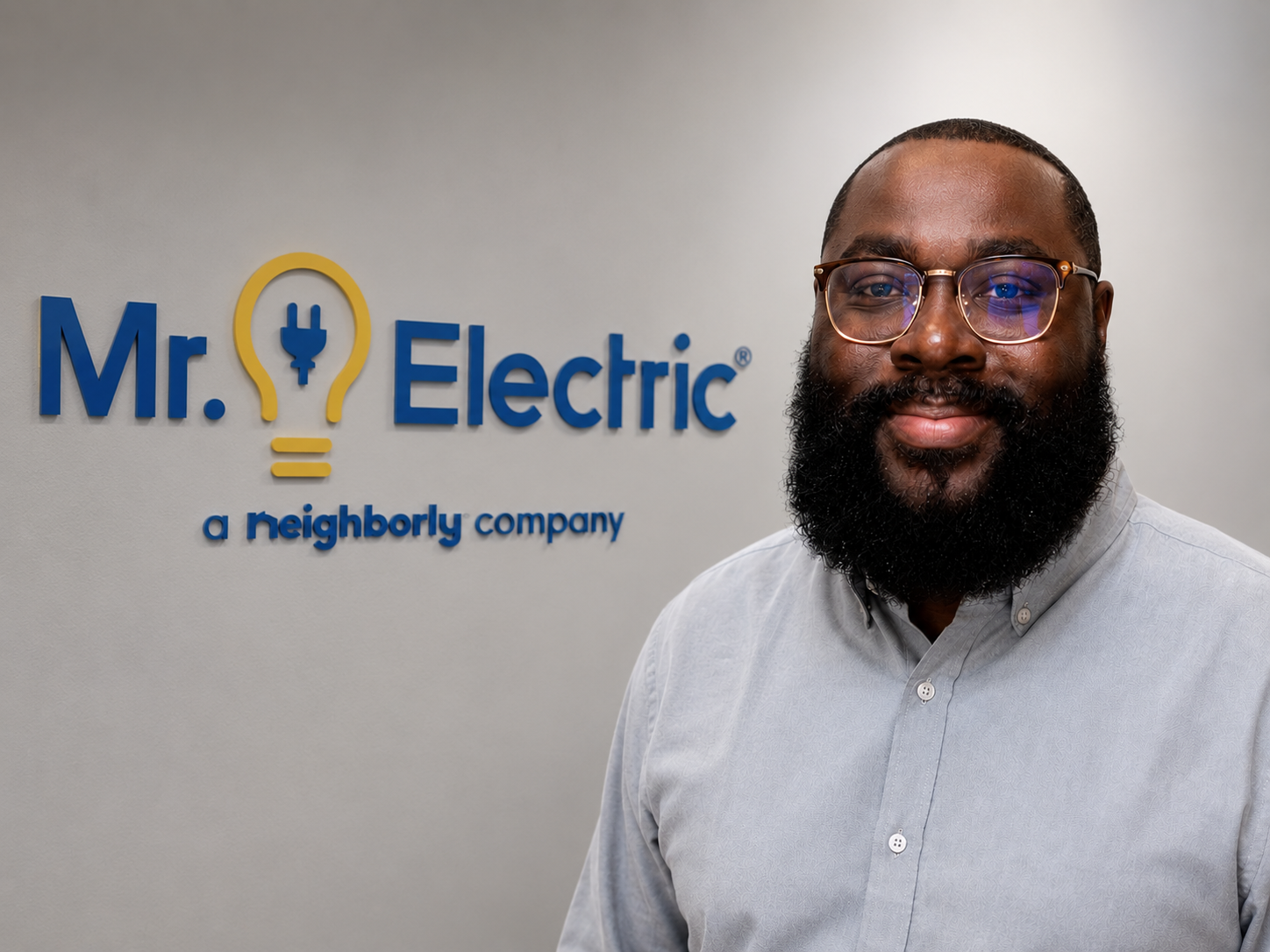
CurVonte didn't start out thinking about franchises. He built a career in healthcare over more than a decade and a half, working in the operational backbone of the industry.
"Previously I was in healthcare. So, that was my first introduction into franchising. I worked in the claims portion of healthcare, making sure providers are credentialed with health insurance... making sure they get paid."
It wasn't a single job. It was a career across multiple companies, different roles, the same industry.
"I've worked for a couple tech companies within healthcare. So, I've kind of jumped around from working for the actual insurance company, working for the software company, and working in the software sector of healthcare."
"I've been working in healthcare for the last almost, yeah, 15 years now after graduating from college."
Fifteen years is significant. It represents deep expertise, strong professional relationships, and the kind of institutional knowledge that takes most people an entire career to build. Curvonte had that. He also had the experience that changed his thinking entirely.
"I was working for a tech company here in Atlanta. They laid us off in 2017. They laid off the entire department. They sent our department overseas and gave us like two months to get the other team set up and get them fully trained to fully take over."
Read that again. He was asked to train his own replacements. To hand over everything he knew, transfer institutional knowledge he had spent years building, and then walk out the door. It's one of the cleaner examples you'll find of what happens when you build your career entirely inside someone else's business. When the economics shift, you don't matter.
CurVonte took the lesson.
The Decision: Roots That Can't Be Cut
The 2017 layoff didn't send CurVonte immediately into franchising. But it planted a seed that kept growing. The longer he stayed in a corporate structure after that, the clearer the answer became.
"I need a business and just like, I want to work, but I want to have my own thing as well. Somewhere where I can't be let go."
That last phrase carries everything. Somewhere where I can't be let go. It's not a complaint about corporate life. It's a precise diagnosis of the problem with it: no matter how good you are, the decision about whether you stay is never entirely yours.
The next step was figuring out what that alternative actually looked like.
"I can't get caught without having my feet planted. I need to have multiple revenues, something on the back end, not just focused on one endeavor."
And for CurVonte, this wasn't just about himself. The vision was bigger, rooted in family.
"Our goal was to create something that the family we didn't have to go outside to seek employment. We could in-house employ ourselves and still make more money possibly."
That's a specific and powerful kind of entrepreneurial motivation. Not just personal financial security, but the ability to build something generational. An asset the whole family could plug into. A business that created opportunity rather than just income.
With that vision in place, the next question was how. He compared options.
"I was just like, what can I get the best return on investment? Looked at real estate. It was a little iffy... I was like, hey, the best ROI, I believe, is franchising."
A deliberate, analytical decision. Not an impulse. Not a reaction. A conclusion reached after actually looking at the alternatives.
Why Finding the Right Franchise Is Harder Than It Looks
Deciding to pursue franchising is one thing. Actually navigating the landscape is another problem entirely.
There are over 4,000 franchise brands operating in the United States. Each one comes with a Franchise Disclosure Document that runs into the hundreds of pages. Investment minimums vary dramatically. Territory structures differ by brand. Some franchises require hands-on operational owners. Others are designed for semi-absentee investors. Some have saturated Markets. Others have open territories with extraordinary upside.
Researching all of this independently, while holding down a demanding career, is not just time-consuming. It is effectively impossible to do with any real rigor.
The traditional franchise broker model is supposed to solve this. But it has a structural problem. Most brokers earn their commission from the franchisor, not the buyer, meaning their financial incentive is to close a deal, not necessarily to find the right fit. Most have never personally owned a franchise. And the support almost universally stops the moment the agreement is signed, leaving the new owner to figure out entity setup, operations, hiring, and marketing without anyone in their corner.
CurVonte's path was different. He worked with Franchise Empire and his advisor Marc.
The Franchise Broker, Process, and What "Unbiased" Actually Means
CurVonte's description of working with Marc, the Franchise Broker, is one of the most specific and credible endorsements in any of the Franchise Empire client stories, precisely because it explains why it mattered, not just that it did.
"Marc kind of made the decision portion easier. With the knowledge, also him owning a previously owning a Five Guys made it so much easier... it was an unbiased sounding board to kind of get us all on one accord."
That detail, Marc's own background as a franchise owner, is worth pausing on. When your advisor has personally lived the experience of buying into a franchise system, evaluating it from the inside, running it, scaling it, there is a different quality to the guidance. He isn't reading from a catalog. He's drawing from something real.
"Unbiased sounding board" is also a phrase that reflects something specific about what CurVonte needed. He wasn't just making a decision for himself. There were other people involved, family and partners who needed to be aligned. Marc helped get everyone on the same page, not by pushing a brand, but by laying out an honest picture.
The broader process at Franchise Empire filled in the gaps that CurVonte didn't even know he had.
"I didn't know anything about due diligence and all of these things that I've learned through Franchise Empire."
That's not a small admission. Due diligence is the entire foundation of a franchise decision. Understanding how to read an FDD, how to evaluate unit economics, how to validate claims by talking to existing franchisees, these are the skills that separate buyers who thrive from buyers who get surprised. CurVonte arrived at his decision equipped.
The coursework did something else, too. It gave him language.
"Those courses were definitely beneficial... I was able to have these words and things that I could say now... like, 'No, you have to pay royalties, but royalties are actually this.' And then you break it down... what you're paying for with those royalties, the Marketing, the global Marketing, the local Marketing."
This is what the Franchise Empire education model is designed to produce. Not just a franchise match, but a genuinely informed buyer who understands the business they're stepping into and can explain it to anyone who asks.
When it came to financing, the support extended there as well.
"We worked with, I think it was Benetrends, through your financing team, and they were able to kind of get us over the threshold with that."
This is the three-step framework at work: Find a Winning Franchise, Launch and Get Profitable, Scale Your Locations. The support isn't transactional. It continues through every phase of the process.
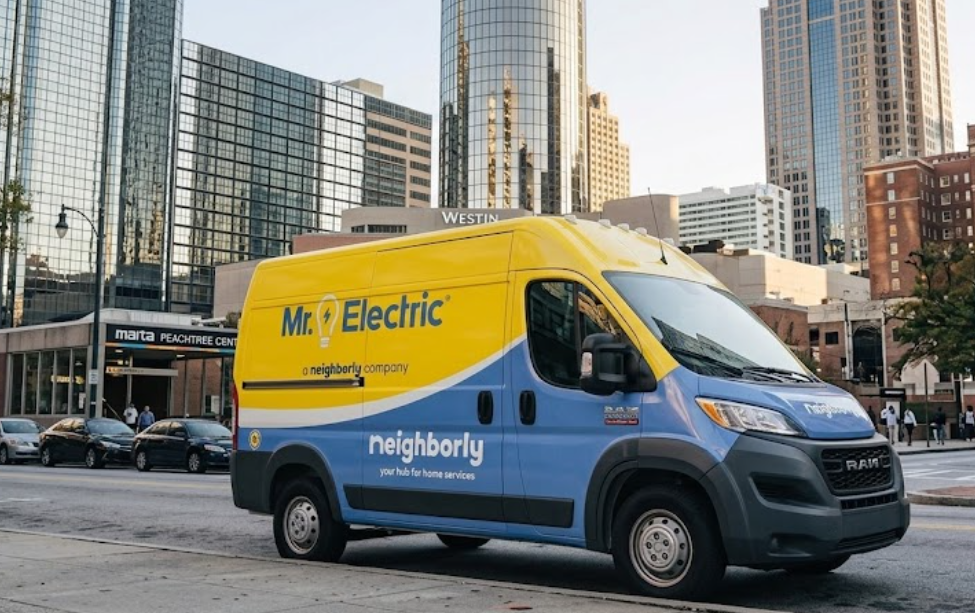
The Franchise: Mr. Electric Atlanta, and a Territory Worth Inheriting
CurVonte didn't just find a franchise. He found a specific opportunity that most buyers would dream about: a prime Atlanta territory with a history.
"Our territory was previously owned and worked for 20 years and it was like one of the biggest, not top 10, 20-ish franchises for Mr. Electric... We were able to kind of scoop in and kind of reshape our map currently and kind of we are now the Mr. Electric Atlanta."
Think about what that means. A territory that was actively worked for two decades, that built itself into a top-20 location nationally for the brand, was available. CurVonte and his team stepped in, claimed the Atlanta identity, and now carry that legacy forward. They're not starting from zero in an unproven Market. They're building on top of two decades of Market presence.
At the time of this conversation, the business wasn't fully open yet, but the indicators were already exceptional.
"I have close to 75 calls already on my phone from customers. The only thing that's live is our website. Our phone number is live. So we're getting generic leads right now. Like, I'm coming in the door with a lot of power."
Website live. Phone number live. 75 calls in the queue. Not a single truck on the road yet. That's what brand recognition and territory history do for a new owner. And the operational foundation was moving fast.
"We have actually secured a van. We've bought supplies... I actually just signed the lease for our second truck as well. So we're going in. We're trying to hire two service electricians off the bat."
The revenue benchmark he's building toward reflects both ambition and realism.
"The previous Mr. Electric, they were a $2 million a year franchise store location. So, if we can get half of that, I think it's possible if we can get the right guys in."
A $1 million first-year target, in a territory with a 20-year track record and 75 pre-launch leads already coming in. That's not a long shot. That's a plan.
What CurVonte Would Tell Anyone Who's Standing Where He Was
The clearest thing in CurVonte's story is what the franchise system itself gave him compared to going it alone.
"The power of a franchise system, right? Because like if you would have started your own electrical company... No leads. No generic leads... it's definitely made a difference."
An independent electrical company would start from nothing. No brand recognition, no operational playbook, no marketing infrastructure, no inbound lead flow. The franchise removes all of that from the equation. You still have to build and run the business. But you're doing it with the wind behind you, not against it.
He's also clear-eyed about the difficulty of the journey. Nothing about this was easy. There were hard conversations, skeptical family members, complicated FDD reviews, financing hurdles.
"I was fighting the uphill battle, but it was definitely worth it with the research and the information that I had... I was prepared to have these tough discussions with looking at FDDs and finding online support... to kind of combat their fears."
The preparation made the difference. Not luck, not timing. The knowledge and confidence to have the hard conversations, because he had done the work to understand what he was walking into.
And for anyone looking at this from the outside, unsure whether the leap is worth taking, CurVonte offers one of the most honest and resonant descriptions of what it actually feels like to be mid-leap.
"Just enjoying the journey, but yeah, shivering a little bit as well, but trying to stay cool at the top while my legs flap around."
That's the most human possible version of what entrepreneurship actually is. There is no moment when it stops being nerve-wracking. The goal isn't to stop shivering. It's to keep moving anyway.
What CurVonte's Story Means for You
CurVonte spent 15 years in healthcare technology and learned, the hard way, that a career inside someone else's organization is only as stable as their next strategic decision. He took that lesson, let it sit for years, and then built something that couldn't be sent overseas.
If you've had your own version of 2017, or if you can feel one coming, his story is a direct answer to the question of what the alternative looks like. Not an abstract one. A real one, with a territory in Atlanta, 75 pre-launch leads, two trucks, and a family vision behind it.
Hundreds of Franchise Empire clients have followed a similar path: a clear reason to own something, the right advisor, the right franchise match, and the support to get across the finish line. CurVonte found all of that. The same path is available to you.
Ready to Build Something That Can't Be Taken Away?
The right franchise, in the right territory, with the right support behind you, is a completely different proposition than going it alone. It's what the Franchise Empire process is built to find.
Schedule a Free Call with Our Franchise Brokers →
In one conversation, you'll get a clear picture of which franchise opportunities fit your budget, your goals, and the life you're actually trying to build. No pressure. No guesswork. Just the kind of honest, informed conversation that CurVonte describes when he talks about working with Marc.


.png)