Two Different Paths to the Same Turning Point
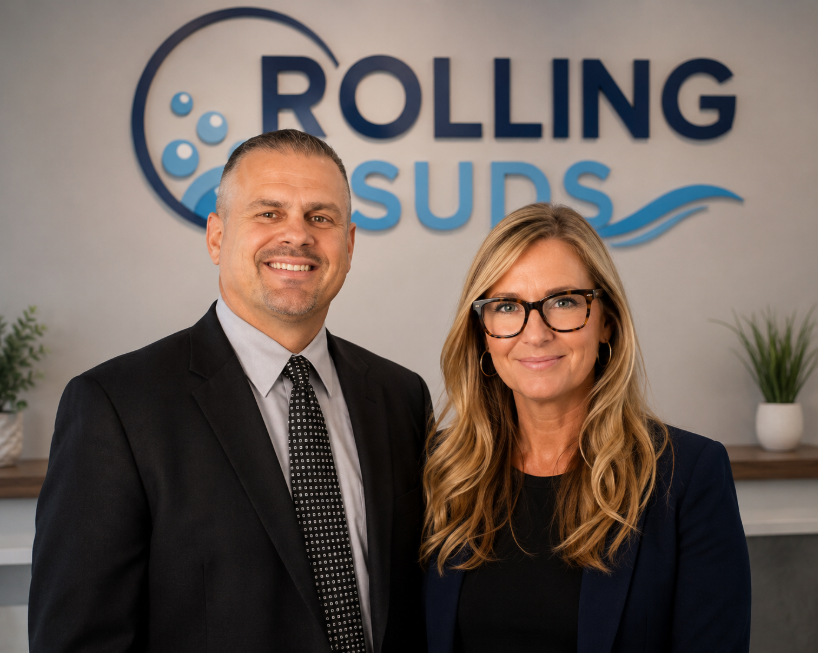
Julie's career arc before franchising was not a straight line. After building deep expertise in database development and reporting for an insurance company, she spent several years in real estate alongside a business partner.
"I, with a partner, had a real estate wholesaling business for about two years and at the same time we were buying rental properties and doing flips, and then bought an apartment complex in 2019."
Real estate gave her something corporate work hadn't: a closer relationship with building and owning something. But it also came with its own limitations, and by the time she and Greg were ready to make a bigger move, they knew exactly what they did not want.
"We only knew that we had certain criteria for the type of franchise... we did not want a storefront, we wanted a lean staff... did not want, you know, assisted living or, you know, home care anything like that because we've already got that done, that business model."
That clarity about what they didn't want turned out to be just as useful as knowing what they did. It narrowed the field considerably and gave their search a real direction.
Why Franchising Made More Sense Than Starting From Scratch
Julie's thinking on franchising versus independent business ownership is worth paying attention to, because it comes from someone who had already built things from the ground up.
"You're going to leverage what somebody else has already designed and put in place."
That's not a passive observation. It's a deliberate strategy from someone who understood what starting from zero actually costs in time, money, and learning curve. The appeal of franchising wasn't ease. It was efficiency: the ability to deploy energy toward building the business rather than building the business's infrastructure.
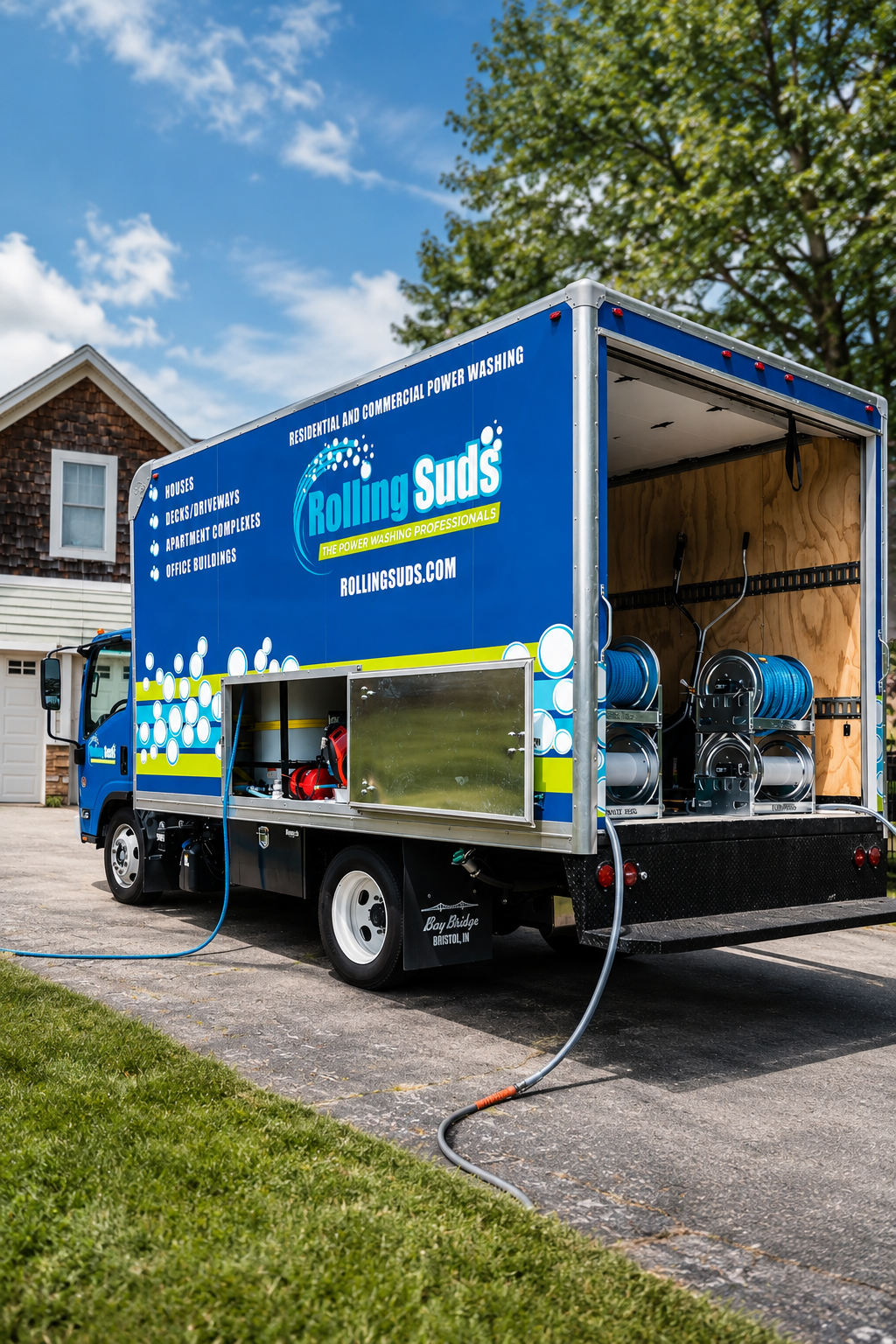
"The things that are already set in place, the systems already for digital marketing... the truck that comes macked out with all the equipment and everything, we didn't have to build that and design it."
For anyone who has ever tried to build a marketing system, source equipment, establish supplier relationships, and develop operational processes all at once while simultaneously trying to land customers, that sentence carries a lot of weight. Each of those elements represents months of work and iteration that Rolling Suds franchisees simply don't have to do.
Why Navigating 4,000+ Franchise Brands Requires Real Help
Julie and Greg knew they wanted a franchise. What they didn't know was how to find the right one.
There are over 4,000 franchise brands currently operating in the United States. Each comes with a Franchise Disclosure Document that runs hundreds of pages and contains financial performance data, franchisee obligations, territory maps, royalty structures, and legal disclosures that require genuine expertise to interpret correctly. Evaluating even a small number of brands thoroughly is a significant research project, and most aspiring franchise owners are doing it in the gaps between full-time careers and family obligations.
The traditional franchise broker model is supposed to solve this problem. But it introduces its own complications. Most brokers earn their commission from the franchisor at the time of signing, meaning their financial incentive is to close a deal, not necessarily to find the best fit. Many have never personally owned a franchise. And the support almost universally ends the moment the agreement is signed, leaving the new owner to figure out entity setup, financing, operations, and marketing largely on their own.
What Julie and Greg found when they connected with Franchise Empire was a fundamentally different experience at every stage of the process.
How a Podcast Led to the Right Decision
Julie found Franchise Empire the way many clients do: by looking for real information and finding a voice that actually made sense.
"I came across your podcast and I started listening to it and reached out one day."
That's not an accident. Franchise Empire, founded by Tariq Johnson, a former corporate professional who made the leap to franchise ownership himself, has built its following by sharing honest, detailed content about what franchise ownership actually looks like. For someone like Julie who had done her research in real estate and understood due diligence, that credibility mattered before she ever had a single conversation.
The Franchise Empire process is built around three steps: Find a Winning Franchise, Launch and Get Profitable, and Scale Your Locations. The support isn't a one-time transaction. It continues through every phase of the process, including the critical early months when new owners are figuring out operations, hiring, and customer acquisition.
For Julie, the most tangible value came in what she didn't know she didn't know.
"I didn't know what an FDD was coming into this. Had no clue. So I don't know how long it would have taken to discover, 'Oh yeah, this is the first thing you need to be looking at.'"
The FDD is the single most important document in any franchise evaluation. It contains audited financials, litigation history, unit-level performance data, and the legal terms that govern the entire relationship between franchisee and franchisor. Going into that process without someone who knows how to read it is the equivalent of signing a complex legal contract without understanding what the clauses mean. The Franchise Empire curriculum made sure Greg and Julie understood it before they committed to anything.
The result wasn't just a better decision. It was a more confident one.
"It helped us to go into this with more confidence... that we had gone through the process and we're going into it with eyes wide open."
And in an honest moment that says a great deal about how close they came to not doing it at all:
"There's no way, I don't even know we've ever would have ever done it had we not signed up with you."
Launching and Building the Right Way
Greg and Julie put wheels on the ground November 18, 2024. They did not wait until everything was perfect before starting to operate.
"We were able to start jobs with friends and family at discounted rates, for free. And so we made mistakes with people that we know well enough to say, 'Hey, you missed this,' just to let us know."
That approach, using a soft launch with known contacts to build competency before pushing for full commercial volume, is smart franchise ownership. It creates a learning environment with low stakes while generating real operational experience, real referrals, and real reviews.
Their approach to customer acquisition since launch has also been deliberately grounded.
"By and large, all of our quotes that are out and converted customers came from doing that boots-on-the-ground [marketing]."
In an environment where many new business owners assume digital advertising will handle growth, Greg and Julie's direct, physical approach to building their customer base reflects a practical understanding of what actually works in local service businesses in the early months.
The potential ahead of them is backed by what the top performers in the Rolling Suds system are already doing.
"One of our rock star franchisees last year... keep in mind these guys are like one year under their belt... I think the rock star was over 800,000 in revenue."
That benchmark isn't a ceiling. It's a data point about what the system is capable of producing when an owner runs it well.
What Greg and Julie Would Tell Someone Standing Where They Were
Julie's advice for new franchise owners is practical and comes from someone who made the mistakes worth avoiding.
"Figure out a way to have some kind of financial runway in the first year."
That guidance alone is worth more than most of the abstract entrepreneurship advice that fills business books. Cash flow management in the first twelve months is where most small businesses get into trouble. Having enough runway to operate confidently, hire appropriately, and make decisions for the long term rather than reacting to short-term pressure is not a luxury. It's a structural requirement.
Her other piece of advice goes to one of the most common traps franchise owners fall into.
"The concept of working on your business versus in your business... it would be very tempting, 'I can jump in, I can save payroll.' He just shouldn't... let's find people because you're going to need them in the peak season anyway."
That distinction, between being an owner who builds systems and leads a team and being a technician who personally performs the work, is the difference between a business and a job. Greg and Julie understood it from the beginning. The franchise model they chose, and the process they went through with Franchise Empire to get there, was designed to support exactly that.
What Greg and Julie's Story Means for You
Julie spent years doing work she could do in her sleep. Greg was in a corporate environment that didn't fit who he was. Neither of them waited for the perfect moment to make a change. They found the right system, went through the process with real guidance, and launched a business built to grow.
If you are in a career that has stopped challenging you, or you are watching someone else's business scale while yours stays flat, or you simply want to build something that belongs to you, their story is a direct answer to the question of what that actually looks like in practice.
Hundreds of Franchise Empire clients have made the same move. The path looks different for everyone. The process for finding the right one is the same.
Ready to Find Your Franchise?
The first step is a real conversation with someone who will give you an honest picture of what the right franchise for your goals, your budget, and your life actually looks like.
Schedule a Free Call with Our Franchise Brokers ->
One call. No pressure. No guesswork. The kind of straightforward, informed conversation that helped Julie and Greg go from feeling stuck in corporate careers to running a Rolling Suds franchise with real revenue targets and a system already built to support them.